Clear Backpacks vs Clear Totes for Students: A Back-to-School Guide
Clear Backpacks vs Clear Totes for Students: A Back-to-School Guide
When a district rolls out a see-through bag policy, the first question every family asks is simple: backpack or tote? Clear backpacks for students carry a full day of books and a laptop across both shoulders, while clear totes are lighter, faster at the door, and easier to store. Getting this choice right at the start of the year saves a mid-semester re-order and a lot of sore shoulders.
This guide compares clear backpacks for students against clear totes across the things that actually matter in a school day — capacity, comfort, gate speed, and durability — and gives you a checklist to spec a bag that meets the 12x6x12 standard most venues and campuses use.
Clear backpacks vs clear totes: how they compare
A clear backpack distributes weight across two straps and a padded back panel, which is the difference between a comfortable walk to third period and a strained shoulder by lunch. It also holds more — textbooks, a binder, a laptop sleeve, and a water bottle — without sagging. The trade-off is a slightly slower security check, because staff open more compartments.
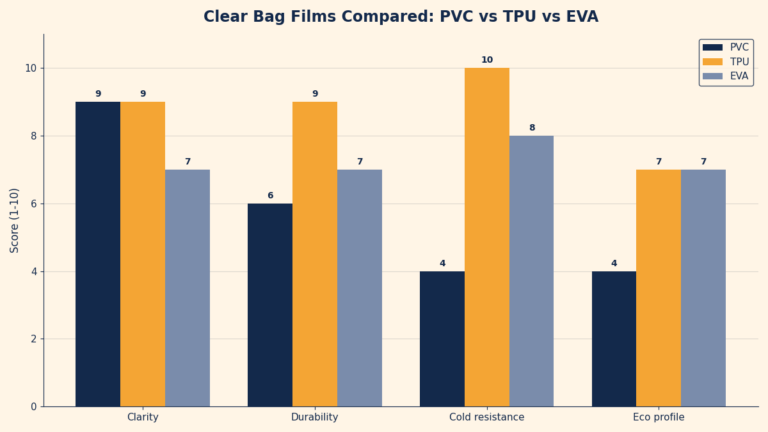
A clear tote wins on speed and simplicity: one open compartment scans in seconds at a stadium gate or campus entrance, and it folds flat for a locker. Totes suit older students carrying less, game-day crowds, and staff who need a quick, compliant bag. The chart below scores both formats on the criteria families weigh most.

A quick rule of thumb
If a student carries a laptop and three or more books, choose clear backpacks for students; the shoulder relief and organization pay off daily. If the bag is mostly for game days, spirit events, or a light class load, a clear tote is the faster, cheaper pick. Many schools stock both and let families choose within an approved size.
Meeting the 12x6x12 standard without guesswork
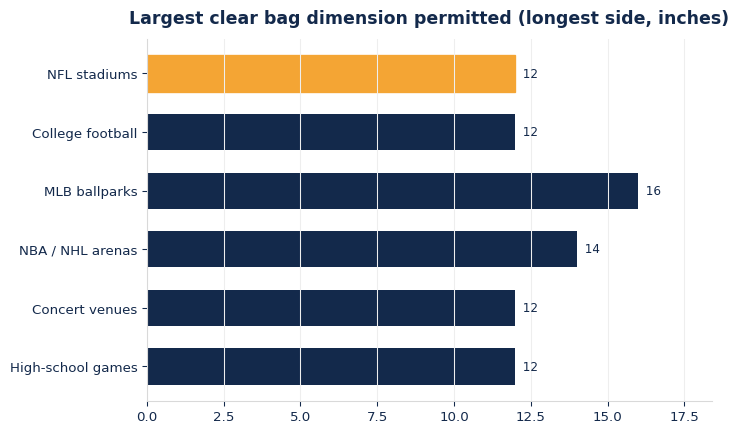
The most common venue and campus rule caps a clear bag at roughly 12 inches wide, 6 inches deep, and 12 inches tall. A clear backpack that respects those outer dimensions still holds a surprising amount because the depth is used well; a tote at the same footprint feels roomier because it is one open pocket. Always spec to the published rule, not to a bag you already own.
Material matters as much as size. Heavy-gauge PVC resists cracking at the corners where student bags fail first, and reinforced, bar-tacked seams keep straps attached under real weight. The priority checklist below is the one we walk district buyers through before a bulk run.

Sizing, branding, and reorder tips for schools
For a program order, decide three things up front: the approved size, the trim and strap color (great for showing school spirit or a class year), and a small printed ID panel where a student name or homeroom can be written or labeled. These choices make the bags recognizably yours and easier to return when lost.
| Format | Best for | Watch-outs |
|---|---|---|
| Clear backpack | Daily book + laptop loads | Slightly slower gate check |
| Clear tote | Game days, light loads | Less shoulder comfort |
| Backpack + pouch | Students who split gear | Keep pouch within size rule |
Whichever format you standardize on, build in a reorder window before winter and spring so replacements match the originals. Pair this with our companion Clear Bag Zipper & Hardware Guide: What Holds Up at the Gate to spec the parts that fail first, and browse the full custom clear bags range to compare approved sizes.
Rolling out a policy without the pushback
The bags are the easy part; the rollout is where districts stumble. Families need to know the exact size limit, when the policy starts, and where to buy an approved bag before the first day — not after a student is turned away at the door. A one-page notice with a photo of an approved clear backpack and a clear tote, the maximum dimensions, and an order link prevents most of the confusion and the angry emails that follow a vague announcement.
Enforcement is smoother when the approved options are limited and consistent. If every family buys from a short list of compliant sizes, staff at the entrance can wave through a recognizable bag in a second instead of measuring each one. That is also why offering a school-branded clear backpack or tote through a single supplier helps: it standardizes the size, builds a little spirit, and quietly funds the program through a small margin if you choose.
Plan for the exceptions up front. Students who carry medical supplies, menstrual products, or other private items should be allowed a small opaque pouch inside the clear bag, and staff should be briefed so no one is embarrassed at the gate. Publishing that accommodation alongside the policy signals that the goal is safety, not surveillance, and it heads off the single most common objection parents raise.
Give families a buying window
Announce the policy at least a month before it takes effect and again two weeks out. That window lets families order, receive, and test a bag — and it lets you reorder any shortfalls before the deadline instead of scrambling in week one.
The real cost of choosing clear backpacks for students
Sticker price is the wrong way to compare clear backpacks for students against cheaper totes, because the number that matters is cost per season of use. A ten-dollar tote that cracks by winter and gets replaced twice costs more than one durable backpack that lasts the year, and it costs a family the hassle of re-buying mid-semester. When you frame the choice as annual value rather than checkout price, the sturdier option almost always wins.
Durability lives in the details families cannot see in a photo. Heavy-gauge PVC resists the corner cracks that end most clear bags, reinforced strap anchors survive a full book load, and a quality zipper endures a year of daily open-and-close. Encourage families to look for those features, or better, standardize on a spec through the school so every student carries a bag built to last rather than a bargain that fails.
There is a spirit dividend, too. A clear backpack in school colors with a small mascot on the strap costs only pennies more than a plain one, turns a compliance requirement into a point of pride, and doubles as a lost-and-found aid. Over a year of hallways, games, and field trips, that branded bag quietly markets the school everywhere a student goes, which is a return no plain tote delivers.
A quick word on ordering for a program
When you are ready to place a program order, gather three numbers first: your venue or district size limit in inches, your enrollment, and a realistic buffer for late registrations and mid-year replacements. Send those along with your school colors and any logo art, and a supplier can quote an approved, branded clear bag in a single pass instead of a back-and-forth. Deciding the size and trim once, at the program level, is what keeps every family carrying a compliant bag and keeps your entrance line moving on the busiest game nights and first days of school.
Frequently asked questions
Are clear backpacks allowed under most stadium rules?
Yes, as long as the backpack stays within the venue’s stated dimensions (commonly 12x6x12) and is genuinely see-through. Tinted or smoke-colored plastic is often rejected, so confirm the bag is clear, not colored.
Can we add a school logo to clear bags for students?
You can. A logo or mascot printed on a strap, trim panel, or a small area of the front keeps the bag compliant while building school identity, and it doubles as a lost-and-found aid.
Need clear bags for the whole school?
Send us your policy dimensions and enrollment and we’ll spec an approved, branded bag and a reorder plan.
Get a Quote