Clear Bag Zipper & Hardware Guide: What Holds Up at the Gate
Clear Bag Zipper & Hardware Guide: What Holds Up at the Gate
A clear bag lives or dies by its hardware. The clear bag zipper, the seams, and the strap anchors are the first parts to fail, long before the PVC panels wear out. If you are buying in volume for a stadium, school, or workplace, the zipper and stitching decide whether the bags survive one season or three — and whether the security line moves or stalls.
This guide breaks down the clear bag zipper options, the seam and hardware details that separate a cheap bag from a durable one, and how to spec parts that hold up to daily open-and-close at the gate.
Why the clear bag zipper fails first
Most bargain clear bags use a lightweight nylon coil zipper with a thin metal pull. Under repeated, hurried use at a gate, the pull bends and the coil separates. A quality clear bag zipper uses a wider coil or molded plastic teeth, a reinforced bottom stop, and a metal pull with a welded ring — details that add pennies per bag but multiply the service life.
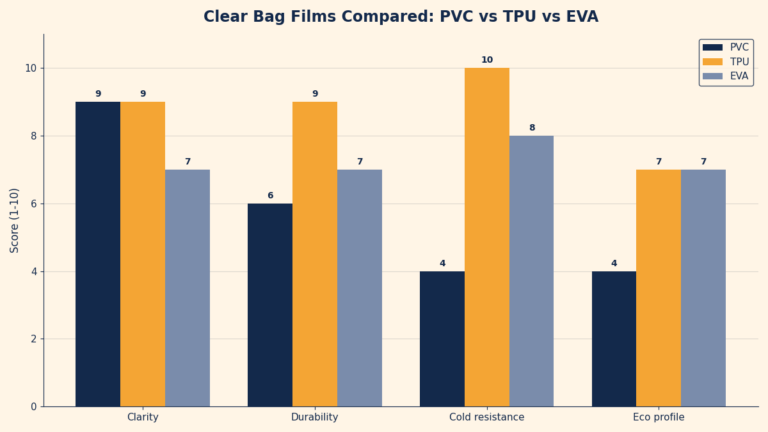
The second failure point is where the zipper tape meets the PVC. If it is simply glued or single-stitched, it peels. Double-stitched or bar-tacked attachment keeps the zipper anchored. The chart below shows typical service life by hardware grade under heavy use.

Coil vs molded-tooth zippers
Coil zippers are lighter and self-heal from minor snags, which suits totes and lighter loads. Molded-tooth zippers are stiffer and stronger, better for heavy backpacks and cold weather where plastic gets brittle. For a mixed program, coil on totes and molded teeth on backpacks is a sensible split.
Seams, straps, and the parts nobody photographs
Beyond the clear bag zipper, look at seam construction. Welded seams (heat-fused PVC) resist water and won’t unravel, while stitched seams should be reinforced at corners and stress points. Strap anchors deserve special attention: rivets or bar-tacked webbing outlast a strap that is merely sewn into a single seam.
Piping around the edges is not just cosmetic; it protects the corners where bags scuff against bleachers and lockers. When you compare quotes, ask suppliers to specify zipper gauge, seam type, and strap attachment — the vague ones usually cut those corners.

A spec sheet you can hand a supplier
Use the table below as a starting spec for a durable bulk order. It reflects what holds up across a full season of stadium, campus, or workplace use, and it gives suppliers no room to substitute the cheapest parts.
| Component | Budget bag | Spec for durability |
|---|---|---|
| Zipper | Thin nylon coil | Wide coil / molded teeth, metal pull |
| Seams | Single-stitched | Welded or double-stitched, reinforced corners |
| Straps | Sewn into seam | Riveted or bar-tacked anchors |
Spec the hardware once and every reorder inherits it. To choose the right format for your crowd first, read our companion Clear Backpacks vs Clear Totes for Students: A Back-to-School Guide, and see approved, gate-ready styles across our custom clear bags range.
How to test hardware before you commit to a run
You do not need a lab to separate a durable clear bag from a disposable one; you need a sample and five minutes. Zip and unzip the bag fifty times in a row, fast, the way a hurried fan or student would at a gate. A quality clear bag zipper stays smooth and re-aligns itself; a cheap one starts to catch, and the coil begins to gap near the stops. That single test predicts most first-season failures.
Next, stress the anchors. Load the bag with a few pounds, lift it by one strap, and give it a firm tug. Riveted or bar-tacked straps barely move; straps merely sewn into a seam start to pucker and pull. Run a fingernail along the seams, too — welded seams feel like one continuous piece, while a weak stitched seam will show loose threads or a gap you can open slightly by hand.
Finally, check the cold-weather behavior if your crowd sits outdoors in fall and winter. Chill a molded-tooth sample in a freezer for an hour and work the zipper; good hardware still moves cleanly, while brittle plastic teeth crack or stiffen. Doing this on a sample before you approve a thousand-unit order is the cheapest insurance you can buy, and it gives you concrete language to hold a supplier to their spec.
Keep one approved sample on file
Once a bag passes, keep that exact unit as your reference sample. On every reorder, compare the new production against it — suppliers sometimes quietly substitute lighter hardware, and a side-by-side check catches it before the pallet ships.
Matching the clear bag zipper to your crowd
The right hardware depends on who carries the bag and where. A stadium selling to adult fans who fill a tote with a jacket and snacks can lean on a smooth wide-coil zipper, since the loads are light and the priority is a fast gate. A school issuing backpacks that haul textbooks and a laptop every day should insist on molded teeth and reinforced anchors, because that daily weight is what pulls a weak zipper apart.
Climate should steer the choice as much as load. Coil zippers stay flexible in the cold and self-heal from minor snags, which suits warm-weather venues and lighter totes. Molded-tooth zippers are stronger and hold heavy backpacks securely, but the cheapest plastic teeth turn brittle in freezing weather, so a cold-climate program should specify a quality molded zipper rather than the lowest bid. Spelling this out in the order prevents a supplier from defaulting to whatever is cheapest that week.
For mixed programs, split the spec intelligently: coil on the totes, molded teeth on the backpacks, and a two-way pull anywhere a security team opens bags from both sides at a busy entrance. Writing these small distinctions into the purchase order costs nothing and means every bag is built for the job it actually does, instead of a one-size compromise that underperforms at both ends of your range.
A spec sheet beats a price comparison
The buyers who end up happiest are the ones who stop comparing prices and start comparing specs. Write down the exact zipper type, seam construction, and strap attachment you want, hand that sheet to every supplier, and ask them to quote against it. That single document turns a confusing field of look-alike clear bags into an apples-to-apples decision, and it holds the winning supplier to the durable hardware on every reorder rather than the cheapest parts available that month. Keep an approved sample on file and check each new batch against it, and your bags will last the seasons you paid for.
Frequently asked questions
What clear bag zipper lasts longest?
A wide-coil or molded-tooth zipper with a metal pull and reinforced stops outlasts a thin nylon coil by a wide margin, especially in heavy backpacks and cold weather.
Are welded seams better than stitched?
Welded seams resist water and won’t fray, which is ideal for clear PVC. Well-reinforced double-stitched seams also perform; avoid single-stitched or glued-only construction.
Want clear bags built to last?
Tell us your use case and volume and we’ll spec zipper, seams, and straps that hold up all season.
Get a Quote