Stadium Clear Bag Rules Explained: The 12x6x12 Standard
Stadium Clear Bag Rules Explained: The 12x6x12 Standard
If you have ever been turned away at a gate holding a bag that seemed perfectly reasonable, you have already met the stadium clear bag rules the hard way. Most major venues in the United States now enforce a version of the same “clear bag policy,” and the number you keep seeing printed on signage is 12 by 6 by 12 inches. Understanding what that measurement actually permits, why it exists, and how it differs venue to venue saves you a long walk back to the car on game day.
This guide breaks down the stadium clear bag rules that govern NFL, college, and most large-arena events, explains the small exceptions that trip people up, and shows you how to choose a compliant clear bag that still holds everything you need for three hours in the stands.
Where the 12x6x12 standard came from
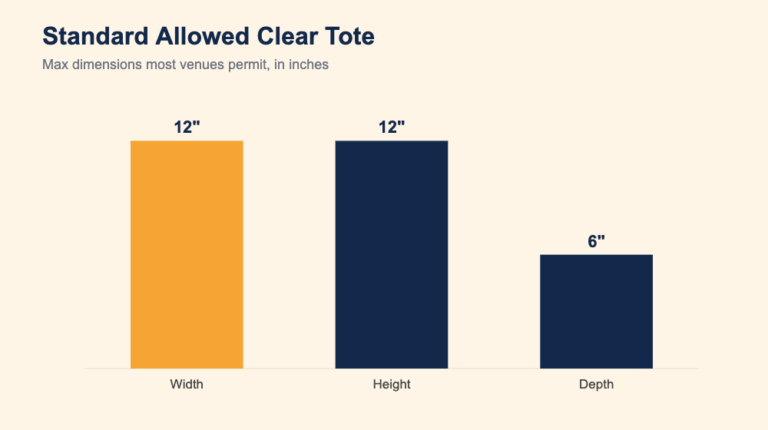
The now-familiar 12x6x12 rule traces back to the NFL, which adopted a league-wide clear bag policy to speed up security screening and reduce the number of hiding places a prohibited item could occupy. The logic is simple: if a guard can see the contents at a glance, the line moves faster and everyone gets to their seat before kickoff. Colleges, minor-league parks, and concert promoters adopted similar language because it was already familiar to fans and easy to sign-post at every gate.
A bag that measures 12 inches wide, 6 inches deep, and 12 inches tall is roughly the size of a sheet of paper folded into a pouch with a little depth. It comfortably holds a phone, wallet, keys, sunscreen, a light layer, and a small snack, which is exactly the point: enough for a game, not enough to conceal much.
What “clear” really means
Policies specify clear plastic, vinyl, or PVC. Tinted, smoked, or frosted material is usually rejected even if you can partly see through it, because the standard the guard is trained to apply is instant visibility, not “mostly transparent.” A faint brand tint at the seams is fine; a colored body is not.
One practical tip: keep a spare gallon freezer bag folded in your car or jacket. It weighs nothing, costs pennies, and turns “you cannot come in” into a five-second fix if you ever grab the wrong bag on your way out the door. Season-ticket holders often keep two or three in the glovebox for exactly this reason.
The small bags almost everyone forgets
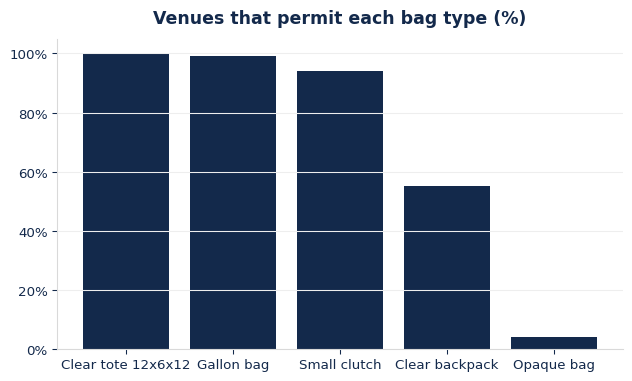
Nearly every clear bag policy also allows two extra items that do not have to be transparent. The first is a small clutch or wristlet, generally capped around 4.5 by 6.5 inches, so you can keep cards and cash out of view. The second is a one-gallon resealable freezer bag, which is the budget-friendly fallback if you forget your tote. Medical and diaper bags are typically permitted after a separate inspection, so parents and anyone managing a health condition are not forced into a transparent-only rule.
What gets you stopped at the gate
The rejections are predictable. Opaque backpacks, camera bags, seat cushions with zippered pockets, and oversized totes are the usual offenders. A clear backpack is a gray area: some venues welcome them, others cap you at the 12x6x12 tote shape regardless of transparency, so check the specific event before you rely on one.
| Item | Typical status | Notes |
|---|---|---|
| Clear tote up to 12x6x12 | Allowed | The reference standard at most venues |
| One-gallon freezer bag | Allowed | Universal fallback option |
| Small non-clear clutch (~4.5×6.5) | Allowed | One per guest, for valuables |
| Clear backpack | Varies | Confirm with the specific venue |
| Opaque backpack or tote | Not allowed | Most common reason for gate refusal |
Reading a specific venue’s policy
Most teams and promoters publish their exact bag rules on the “know before you go” or “gate policy” page of their site, usually within a week of an event. When you read one, look past the headline dimension and check three things: whether clear backpacks are named specifically, what size clutch is permitted, and how medical or diaper bags are handled. Those three details are where venues differ, and they are exactly the details that get glossed over when fans assume “clear bag policy” means the same thing everywhere. A two-minute read the night before is far cheaper than a trip back to the parking lot.
Why venue limits differ
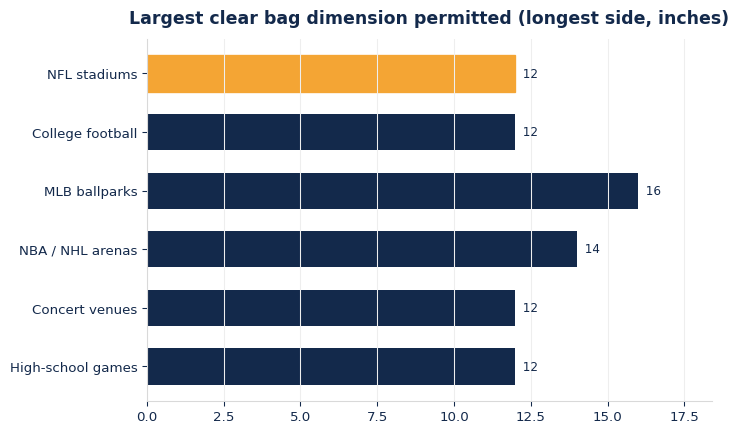
Ballparks and some arenas allow slightly larger bags than football stadiums, in part because baseball and basketball crowds carry different gear and because those buildings were retrofitted for security at different times. The chart above shows the spread: an NFL gate holds you to the strict 12-inch reference, while an MLB gate may permit a longer tote. None of this changes the safest rule of thumb, which is to build your everyday bag around the smallest common denominator so it clears every gate you are likely to visit.
Choosing a bag you will actually reuse
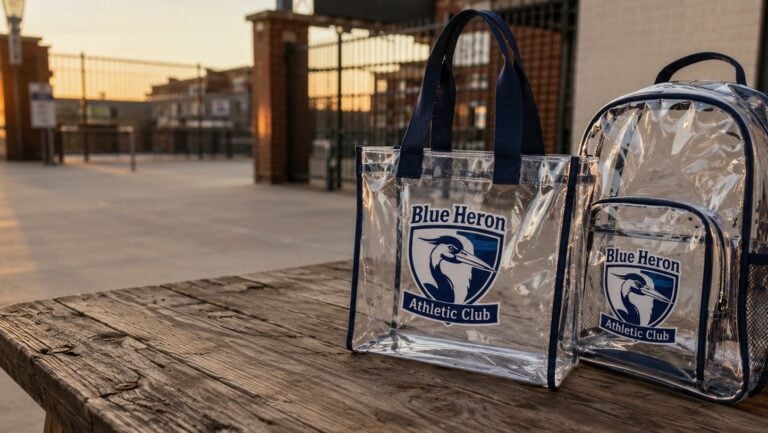
Because these rules are now standard, a good clear tote pays for itself across a season. Look for reinforced handles, a flat base so the bag stands up in a cramped row, and welded rather than glued seams, which survive rain and repeated packing far better. A printed logo panel is fine as long as it does not obscure the interior; most venues read a modest graphic as decoration, not a violation.
Sizing to the rule, not past it
It is tempting to buy the largest bag that “looks” compliant, but guards measure to the sign. Staying at or just under 12x6x12 removes any judgment call at the gate. If you regularly need more capacity, pair the tote with the permitted clutch rather than sizing up the main bag.
Finally, think about the timeline. Districts that announce a bag policy in spring, before summer shopping, see far smoother compliance in the fall than those who spring it on families a week before the first game. Pair the announcement with a linked list of approved bags and a note about where to buy them, and most families will simply take care of it over the summer without a single complaint reaching the front office.
Bottom line
The stadium clear bag rules are more consistent than they feel in the moment: a clear tote no larger than 12x6x12, plus a small clutch and a gallon bag, will get you through almost any gate in the country. Learn the exceptions, confirm anything unusual with the specific venue, and invest in one well-made compliant bag you can reuse all season.
Order gate-ready clear bags in your colors
Tell us your quantity and logo and we will spec a fully compliant 12x6x12 tote your whole group can carry.
Get a QuoteHome · About · Buying guides · Companion guide: clear bags for schools
Win Free Stuff
Enter below for a chance to win plus receive 10% off your first order.
🎉 You are in!
Check your email for your 10% off code. Good luck!